
2 hr
Greenwich Village Walking Tour
Walk through New York's most creative district and uncover its artistic legacy and radical history
Reserve
Hand-picked by our editors — only the best 5 experiences from 87 reviewed.
Verified partners for every tour, free cancellation where available, and instant confirmation on every booking.
2 hr
Walk through New York's most creative district and uncover its artistic legacy and radical history
Reserve
3 hr
Eat your way through Manhattan's bohemian heart with bagels, pizza, falafel, and a mystery finale
Reserve
2 hr
Discover bohemian history, legendary music venues, and pivotal civil rights sites in NYC's most storied neighborhood.
ReservePrices from verified partners. Availability updates in real time at checkout. Free cancellation policies apply where shown.
The landmarks, rooms, and views travelers on this tour remember — all visible on a single visit.
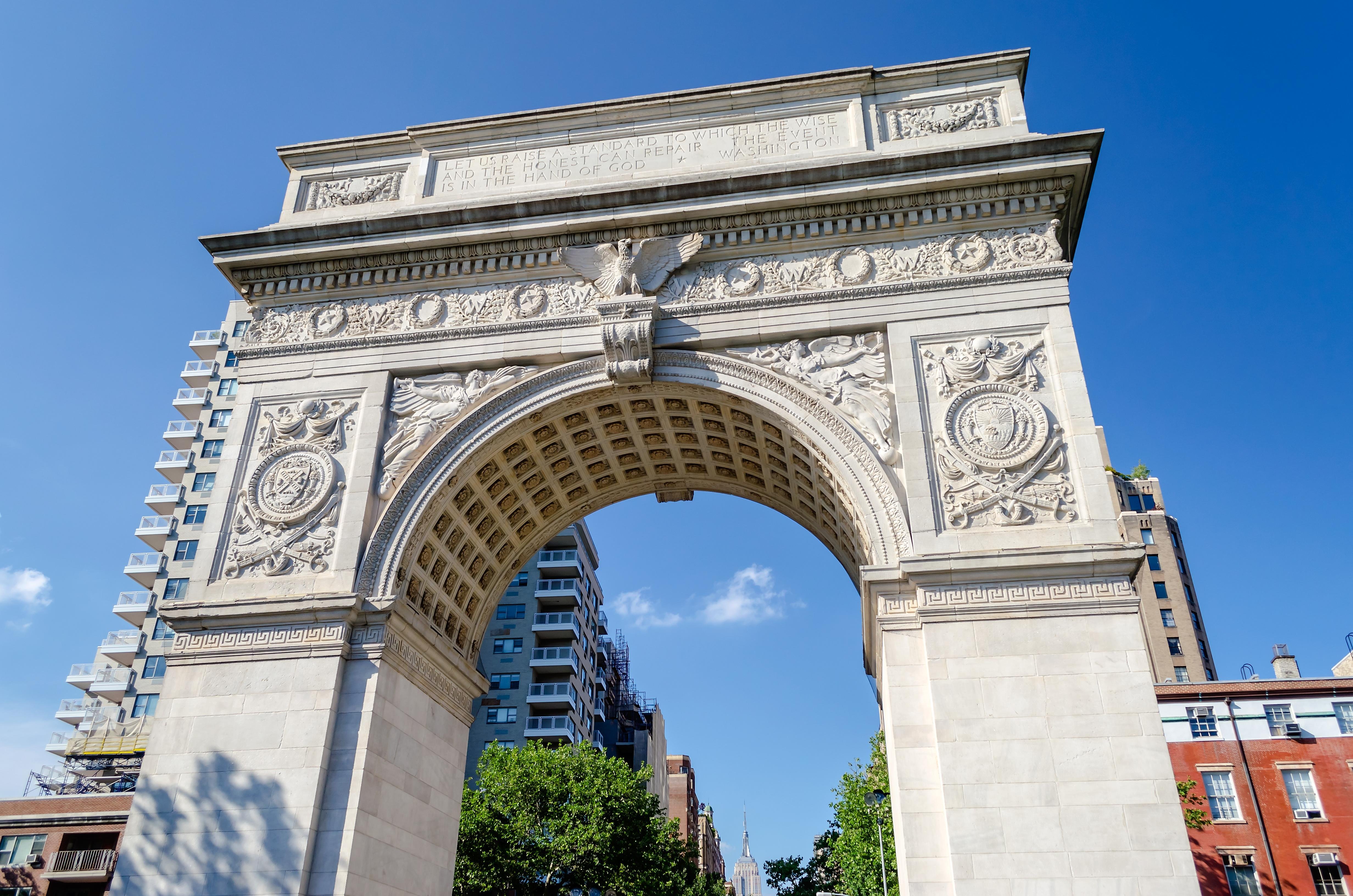
This marble monument was designed by Stanford White and serves as a central symbol of the neighborhood. It stands 86 feet tall and marks the northern entrance to the park.
The Stonewall Inn
Jefferson Market Library
Grove Street
MacDougal Street
The Greenwich Village Food & History Walking Tour provides a sensory exploration of local neighborhood flavors, whereas the pure history tour focuses exclusively on the legacy of NYC landmarks. Most travelers seeking a comprehensive introduction to this historic district prefer the culinary-integrated experience.
| Feature | Top pick Food & History Tour | History Walking Tour |
|---|---|---|
Primary Focus |
Culinary and historical landmarks | Architectural and literary heritage |
Typical Duration |
2.5–3 hours | 2 hours |
Activity Level |
Moderate walking | Moderate walking |
Food Inclusions |
Multiple tastings included | No food provided |
Target Audience |
Foodies and history enthusiasts | Architecture and history buffs |
| See tickets → |
Verdict: Select the greenwich village food & history walking tour if you want to sample local cuisine, or choose the history-only route if you prefer an in-depth lecture on Greenwich Village streetscapes and greenwich village food & history walking tour tickets are not your priority.
Choose your ticket, select your date, and reserve in under two minutes. Secure checkout handled by our verified partner.
Instant confirmation by email, with a mobile voucher you can save offline. No printing, no queuing at a collection desk.
Arrive at the entrance, show your voucher on your phone, and walk in. Most tickets include priority or skip-the-line access.
Practical details for your visit straight from our verified partners — hours, access, rules, and how to get there.
Fifth Ave, Waverly Pl, W 4th St, and Macdougal St
Look for the guide holding a sign
Take the A, C, E, B, D, F, or M subway lines to West 4th Street station.
Greenwich Village is highly pedestrian-friendly for local visitors.
Wear comfortable walking shoes suitable for city pavement and uneven historic sidewalks. Dress appropriately for the local New York weather conditions during your greenwich village food & history walking tour.
Keep belongings minimal as you navigate crowded streets on your greenwich village food & history walking tour tour. Large backpacks are discouraged to ensure easier access into boutique food venues.
Photography is permitted throughout the greenwich village food & history walking tour. Capture images of the classic brownstone architecture and historic street signs.
The greenwich village food & history walking tour involves significant walking over variable terrain. Please inform the operator of mobility requirements in advance of your Greenwich Village exploration.
Mobile phones are permitted for navigation and photography during your greenwich village food & history walking tour tickets experience. Please silence devices during guide presentations.
Families are welcome, though the greenwich village food & history walking tour may involve long periods of walking. Check the specific tour details for age recommendations regarding food tastings.
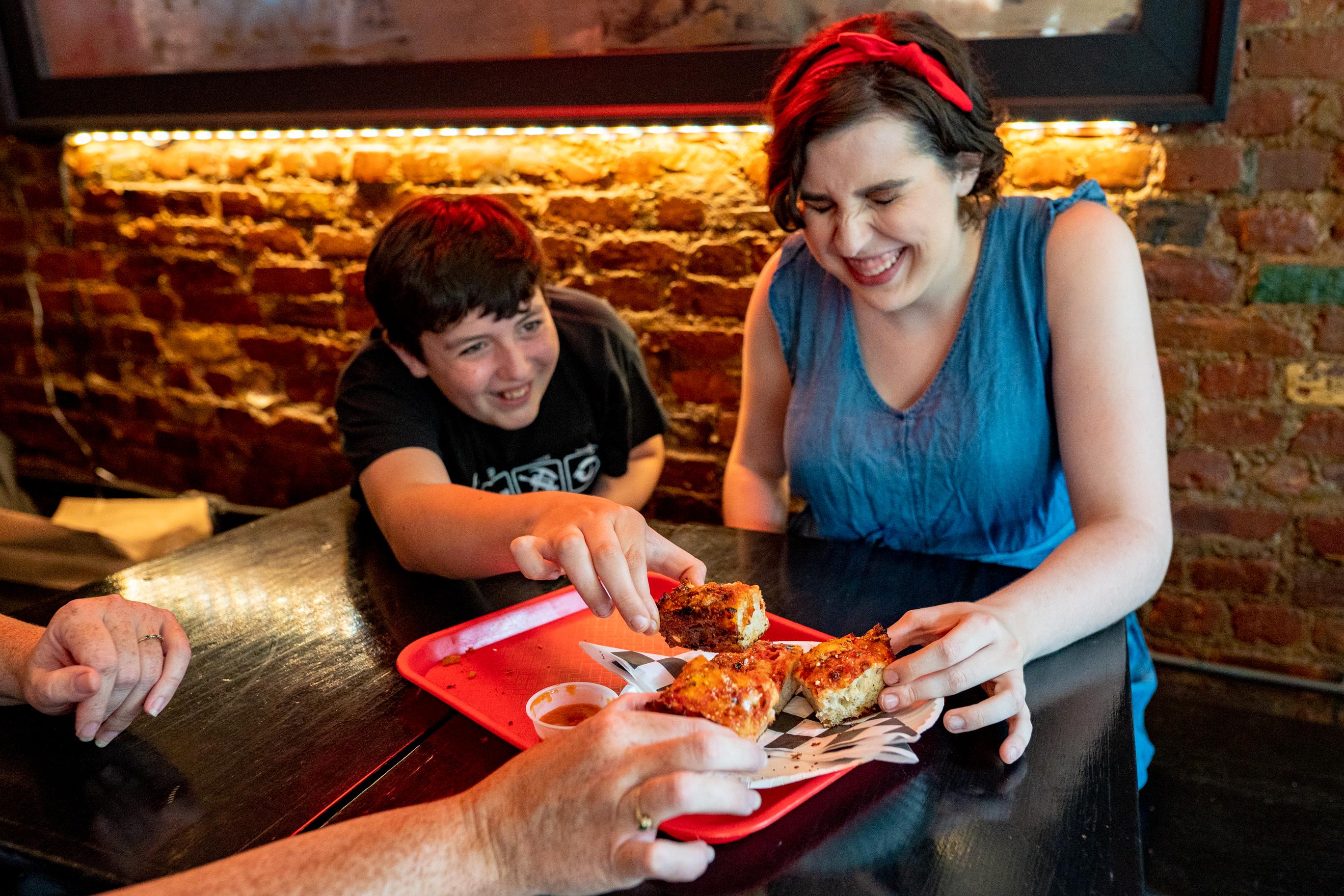
The greenwich village food & history walking tour includes curated tastings at local culinary landmarks. Please communicate any severe food allergies to the guide before starting.
Pets are generally not permitted on group tours due to indoor food service regulations. Service animals should be cleared with the operator prior to arrival.
Tours proceed rain or shine unless dangerous conditions exist. Arrive at the meeting point 10 minutes before the scheduled start time.
Fifth Ave, Waverly Pl, W 4th St, and Macdougal St
Look for the guide holding a sign
Get directionsBest time to go, insider tips, nearby landmarks, and the cancellation fine print — flip through to skim what matters to you.
How crowds, weather, and events shift across the year.
Mild temperatures and blooming trees make for pleasant walks.
August offers vibrant street life, though expect high humidity.
Ideal conditions with cooling temperatures and fall foliage.
Quieter streets but require warm attire for the outdoor tour.
Small details that turn a good visit into a great one.
Reserve your greenwich village food & history walking tour tickets early to guarantee a spot.
Ensure the guide is aware of your dietary needs before the greenwich village food & history walking tour starts.
You will cover significant ground during the greenwich village food & history walking tour tours.
Use the 09:00–17:00 arrival window for the best light on your greenwich village food & history walking tour.
Hydration is important while participating in the greenwich village food & history walking tour.
Non-bookable sights within a short walk — free to visit, easy to pair.
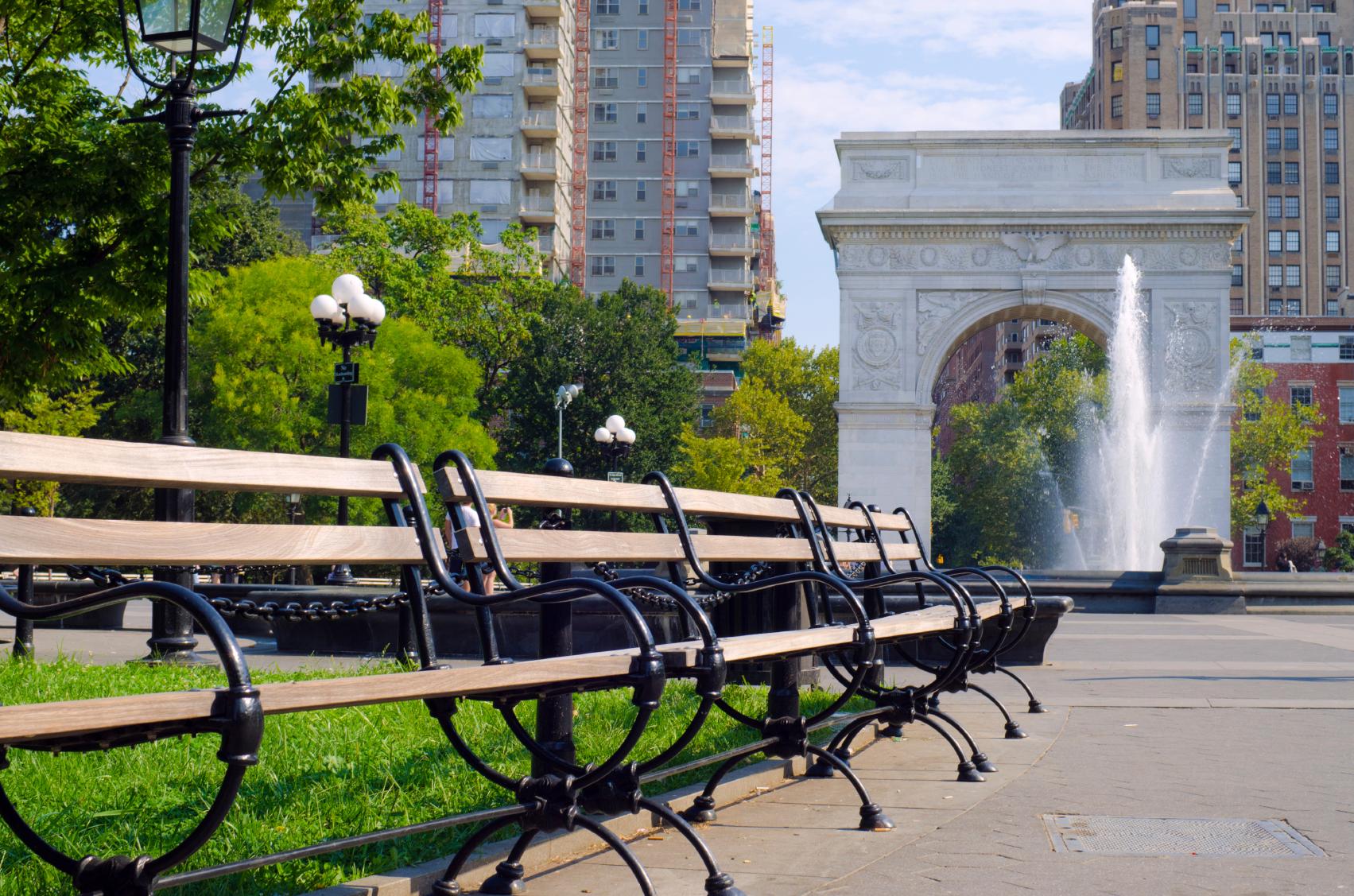
Iconic park known for its arch and historic fountain.
Important site representing the LGBTQ rights movement.
Striking Victorian Gothic structure formerly a courthouse.
Famous underground comedy club in the heart of the village.
Flexible, no hidden fees.
Full refunds are typically available if cancellation occurs within the operator's specified window, usually 24 to 48 hours prior to the tour. As this is a walking tour experience, there is an entrance fee of 0 USD.
Hand-picked options within walking distance — pick a district for vibe, or a specific hotel for convenience.
Historic hotel with charming period decor.
Classic property located near the center of the village.
Neighborhood offering various guesthouses and rentals.
The grid that defines Manhattan breaks apart south of 14th Street, yielding a tangle of crooked lanes named for long-vanished orchards and Dutch farmsteads. Greenwich Village emerged as a distinct settlement in the 1790s, when yellow fever drove New Yorkers north of the denser port wards; by the 1820s Federal-style rowhouses lined Washington Square, their parlors occupied by merchant families and professors from the newly founded university. The neighborhood's transformation into a bohemian capital began in earnest after the Civil War, when declining rents and proximity to the publishing houses of lower Broadway drew writers, painters, and political radicals. By the 1910s the Village was home to an extraordinary density of creative talent—Edna St. Vincent Millay, John Reed, Djuna Barnes—and the cafés along MacDougal Street served as de facto salons. Today the neighborhood retains a layered architectural record that spans three centuries. Federal rowhouses with Flemish-bond brickwork still stand on Washington Mews and MacDougal Alley, their carriage houses converted to studios in the 1920s. Greek Revival townhouses built in the 1830s dominate the blocks west of Sixth Avenue, their parlor floors marked by cast-iron railings and granite stoops. The 1916 zoning law triggered a wave of apartment construction—low-rise brick structures with terra-cotta detailing—that now forms the Village's predominant streetscape. Culinary institutions have occupied the same storefronts for decades: Faicco's Italian Specialties has operated on Bleecker Street since 1900, while Murray's Cheese opened in 1940 and pioneered the city's artisanal cheese trade. The intersection of food and history defines the Greenwich Village food & history walking tour experience. Washington Square Park functions as the neighborhood's civic core, its 9.75-acre footprint tracing the outline of a potter's field that held more than twenty thousand bodies before redesign as a public space in 1826. The marble arch—modeled on Paris's Arc de Triomphe—was erected in 1892 to commemorate the centennial of George Washington's inauguration and anchors Fifth Avenue's southern terminus. The fountain, installed in 1852 and rebuilt in 1872, remains a gathering point for buskers, chess players, and students from the adjacent New York University campus. Streets radiating from the square preserve the names of early landowners and geographic features: Minetta Lane follows the path of a buried creek, while Cornelia Street honors the daughter of a Revolutionary War-era mayor. These layers accumulate rather than replace one another, making the Village a legible chronicle of New York's evolution from port town to global metropolis.
"The grid that defines Manhattan breaks apart south of 14th Street, yielding a tangle of crooked lanes named for long-vanished orchards and Dutch farmsteads."
A step-by-step walkthrough of the visit — what you'll see, how long each stage takes, and the details that matter.
You meet your guide near the Washington Square Arch, its marble surface catching the morning light as skateboarders carve arcs around the fountain. The group numbers eight or ten, small enough that you catch every word as the guide traces the park's outline and explains the potter's field beneath your feet. You walk south on Thompson Street, pausing outside the building where Louisa May Alcott lived in 1857, then turn west onto Bleecker. The first tasting happens at a century-old bakery: you're handed a warm sfogliatelle, its shell crackling as you bite through the layers. The route continues through narrow blocks where Federal rowhouses alternate with mid-century apartment buildings. You stop at Minetta Tavern, where the guide recounts its Prohibition-era role as a speakeasy, then cross MacDougal to visit a cheese shop that has occupied the same storefront since 1940. You sample aged pecorino and a wedge of robiola, the flavors sharp and grassy. The walk threads through Washington Mews, a cobblestone alley lined with converted carriage houses, before circling back to Sixth Avenue. You pause outside the Jefferson Market Library, its Gothic Revival tower rising above the trees, and learn that the building served as a courthouse before conversion in 1967. The final tasting—espresso and biscotti at a café on Cornelia Street—comes as the group disperses, the guide offering recommendations for lunch and pointing you toward the Stonewall Inn two blocks south.
The tour operates daily, and you can participate at any time, though we recommend the 09:00–17:00 arrival window for the best experience.
Accessibility depends on the specific path and venues, as much of the Greenwich Village area features historic, uneven terrain.
Yes, the greenwich village food & history walking tour includes curated tastings at various iconic neighborhood culinary stops.
You can easily reach Greenwich Village via the West 4th Street subway station or by walking through the local streets.
Families are welcome, provided participants are comfortable with the walking intensity of the greenwich village food & history walking tour.
Cancellations are subject to the operator's specific refund policy, typically requiring notice 24–48 hours in advance for the 0 USD entrance fee experiences.
We recommend keeping bags minimal during your greenwich village food & history walking tour tour to navigate busy cafes easily.
Yes, you are welcome to take photos of the beautiful architecture during your greenwich village food & history walking tour.
The best time is during daylight hours between 09:00–17:00 to fully appreciate the historic landmarks and neighborhood layout.